Gitana 18: Reimagining Offshore Flight for Open Oceans
Inside a collective architectural vision led by Guillaume Verdier
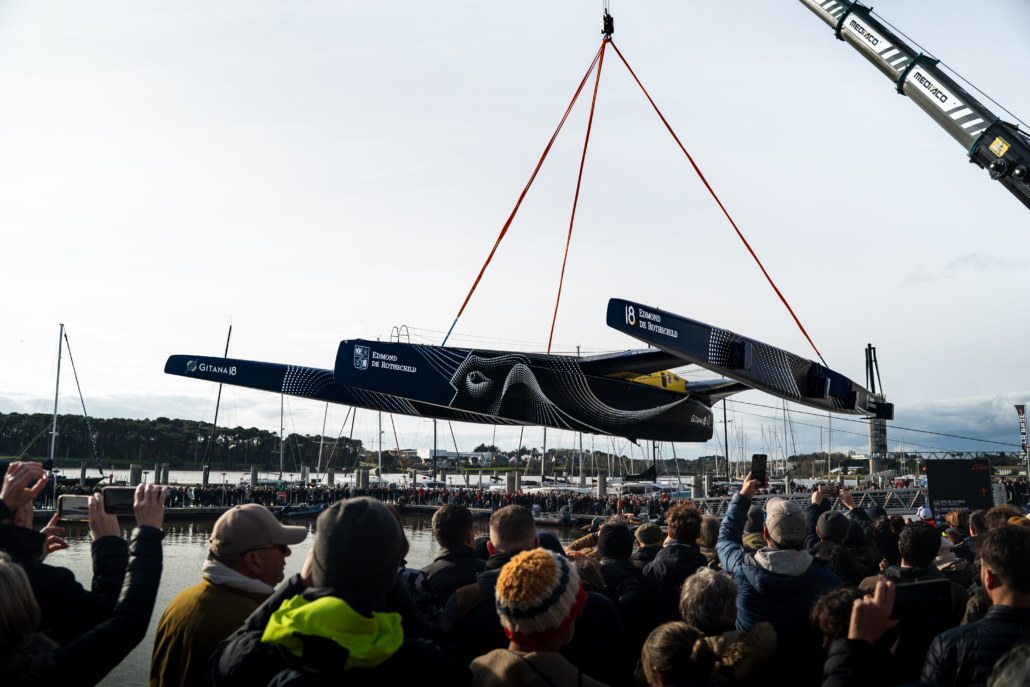
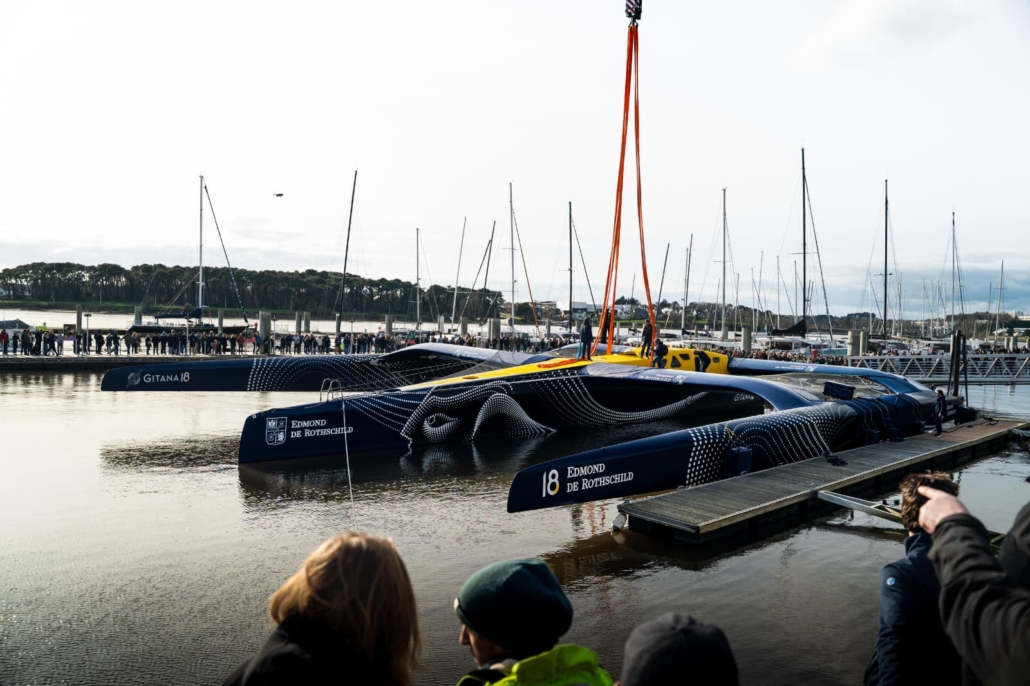
Gitana 18 stands as a powerful illustration of what modern naval architecture can achieve when vision and teamwork move forward together. With the launch of Gitana 18 Maxi Edmond de Rothschild, a new chapter opens in the evolution of offshore racing trimarans. More than the unveiling of a boat, this moment reflects several years of collective design work skillfully managed by Herve Penformis. This progressive project is a shared exploration of a close-knit team of naval architects, engineers, and specialists, working hand in hand with the Gitana Team for the past three years. From the outset, Gitana 18 was conceived not as an incremental step, but as a clean-sheet project. The ambition was clear: to design an Ultim trimaran fully dedicated to sustained offshore flight, capable of redefining performance standards over long distances and in real ocean conditions.
An Architectural Vision Built as a Team
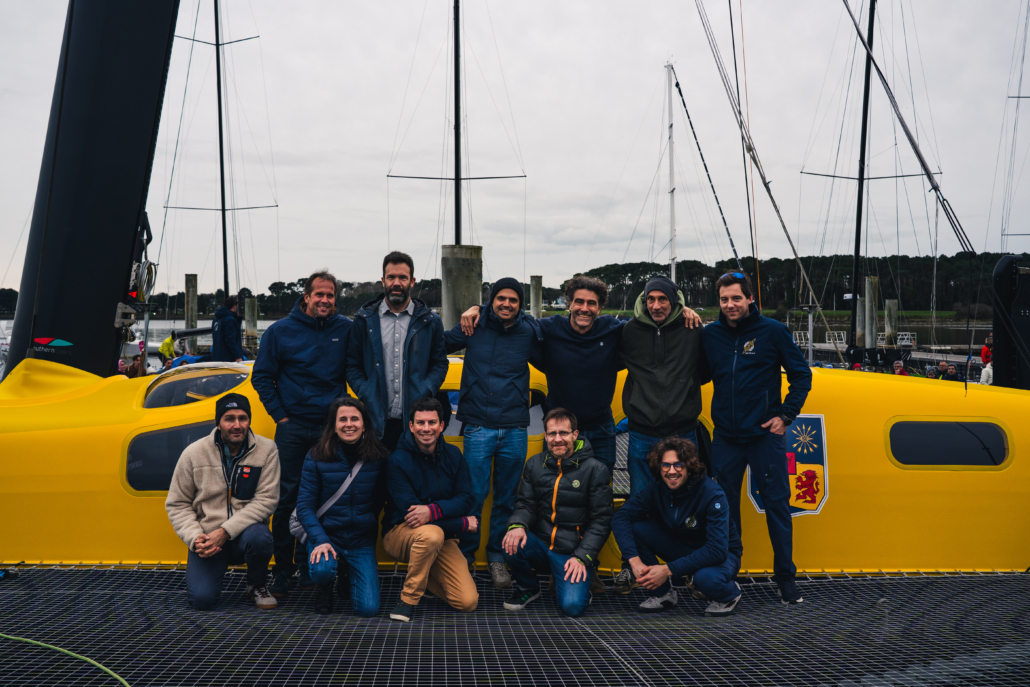
At the heart of the project lies a deeply collaborative process. Verdier’s role was to frame the architectural intent, ensure coherence across disciplines, and foster a working environment where ideas could be tested, challenged, and refined. Within the design office, naval architecture, structures, aerodynamics, and systems engineering were developed simultaneously, not sequentially. This integrated approach allowed the team to explore interactions between hull geometry, foil design, structural stiffness and aerodynamic surfaces as a single, evolving system.
Rather than pursuing isolated performance gains, the team focused on global balance: how the platform behaves in flight, how loads are transmitted, how control is maintained offshore and how reliability is preserved over extreme distances.
The development of Gitana 18 represents nearly two decades of cumulative full-time engineering work.
It is the result of a highly collaborative effort bringing together naval architects, CFD specialists, structural engineers, simulation experts, and designers across multiple countries, united under a shared architectural vision led by Guillaume Verdier.
Project Team – Gitana 18 – Led by Guillaume Verdier
Core Design Team
|
Name |
Role / Expertise |
|
Guillaume Verdier |
Naval Architect · Structural Designer · Simulator |
|
Veronique Rolland |
Administration |
|
Hervé Penfornis |
3D Design (Deck & Cockpit) · 2D Drafting · Project Management |
|
Romaric Neyhousser |
Naval Architect · 3D & 2D Design · Sail Plan & Deck Integration |
|
Loïc Goepert |
Naval Architect · VPP Simulation · Appendages |
|
Jeremy Palmer |
Drafting · Appendage Calculations |
|
Erwan Tymen |
3D & 2D Design |
|
Alexis Muratet |
Stability · 2D/3D Drawings · Structural Calculations · Weight Estimates |
|
Philibert Chenais |
Naval Architect · Production Drawings |
|
Romain Garo |
CFD Analysis |
|
Véronique Soule |
CFD · VPP · Appendage Simulation · Optimisation |
|
Winnie Thia |
Mechanical Design |
Performance & Simulation
|
Name |
Role / Expertise |
|
Benjamin Muyl |
Naval Architect |
|
Matheo Sacaze |
Appendage Simulation · Structural Performance |
|
Nedeleg Bigi |
Simulation |
|
Loughlin Dudley |
Simulation |
Structural Engineering (FEA & Analysis)
|
Name |
Role / Expertise |
|
Andy Kensington (NZ) |
Senior Structural Analyst · Finite Element Analysis |
|
Adam Greenwood (NZ) |
Structural Analysis · 3D & 2D Drafting |
|
John Little (NZ) |
Structural Analyst · FEA |
|
Gaspar Vanhollebeke |
Structural Analyst · FEA |
|
Ben Corkery (NZ) |
Structural Analyst · FEA |
|
Minkyo Seo (NZ) |
Drafting |
|
James Hamilton (NZ) |
Structural Analyst · FEA · Independent Double Checks |
Advanced CFD & Fluid-Structure Interaction
|
Name |
Role / Expertise |
|
Anna Mir |
Appendage CFD · Fluid-Structure Interaction (FSI) |
We Collaborated with the integrated design team driven by :
- Sebastien Sainson ( Project manager, monitoring and execution)
- Pierre Tissier (Technical Director)
- Charles Caudrelier ( Skipper)
Together with:
- Erwan Israel ( Simulation / Engineer / Sailor)
- An Bernard ( Structure -FEA-triple checks)
- Malo Bellec (meca designer)
- Thomas Bled ( mechanic )
- Ludovic Le Noc ( Mechanic – systems)
- Alice Duvivier ( system integration)
- Felix Tiphaine ( Mechanic – systems)
- Yannis Troalen ( Naval architect, Simulator and VPP advisor)
Designing for maximizing Permanent Flight
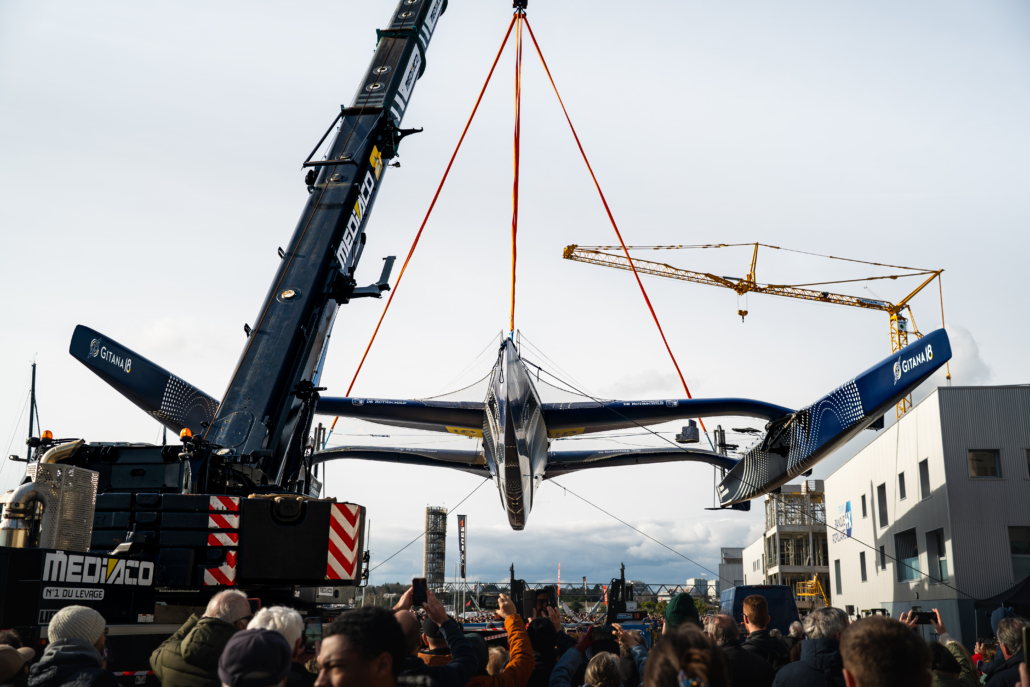
Gitana 18 is the result of a radical design choice: assuming flight as the boat’s primary sailing mode. This assumption reshaped every architectural decision.Hull volumes, crossbeam geometry, appendage positioning and structural architecture were all drawn to support stable, efficient flight. The platform was optimized for high apparent wind angles and reduced hydrodynamic drag, while maintaining sufficient safety margins for offshore use. We can adapt for different needs of stability whether we are reaching / upwind or downwind. For example: downwind we can bring the foil closer to the main hull by rotation in Cant and thus have a lower righting moment.We can also retract the windward foil fully so that it does not slow down the boat by constantly touching the water in rough sea state. The rudders were designed so that the elevator remains constantly horizontal when deflected. We can have a very stiff and safe setup.They also can rotate in case of a collision.
The foils, rudders, and daggerboard systems were developed in close coordination with structural and control specialists. Their geometry and integration reflect countless iterations, simulations and internal reviews, a process where collective expertise proved essential to manage the complexity of a flying offshore trimaran.The team created integrated flaps rather than rotating the full big foil or rudders. It pushes much further the limit of cavitation and requires way less energy.
Structure, Aerodynamics, and Coherence
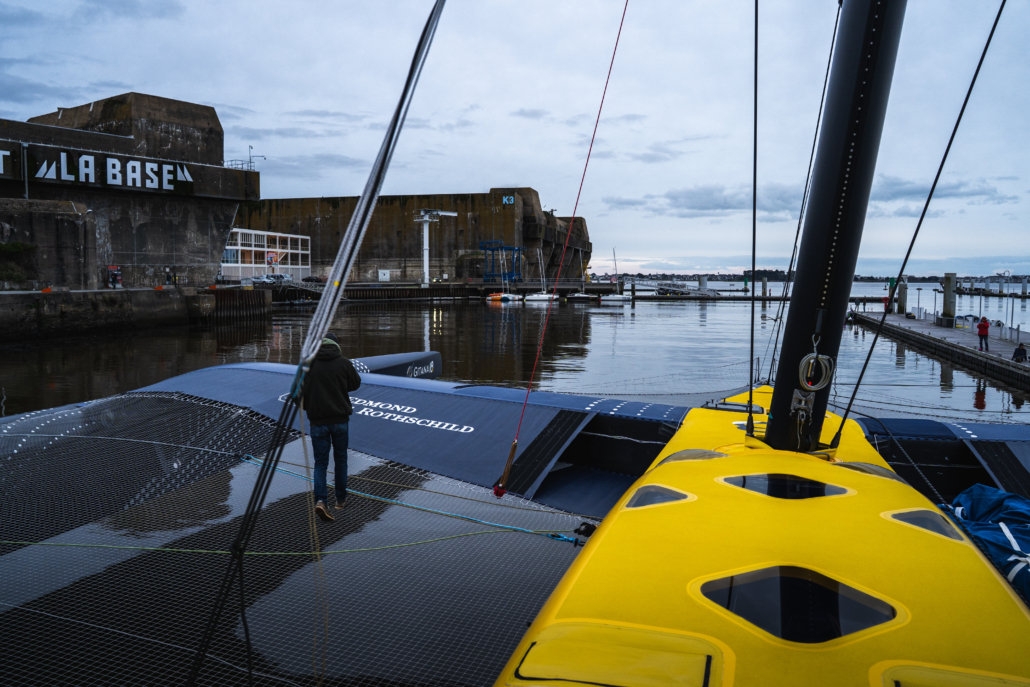
One of the major challenges faced by the design team was achieving exceptional stiffness with minimal weight. The structural concept of Gitana 18 is not merely about strength; it is about ensuring predictability and consistency in flight.At the same time, aerodynamic considerations played a central role. Deck shapes, fairings, and transitions between volumes were designed to reduce drag and contribute to lift, particularly at high speeds. Here again, the work relied on constant dialogue between architects, aerodynamicists, and builders. This continuous exchange between disciplines allowed the project to progress as a coherent whole, rather than a collection of optimized parts. The proposed concept is based on the idea that a stiff platform ( thus deforming less in waves) will help a lot the dynamic stability of the flight. The accuracy of the control will reach a new era. This is why we proposed to integrate the roof to the structure of the main hull. It will also bring stiffness to the fore stays which is the base of the sail driving force.
A Shared Culture of Innovation
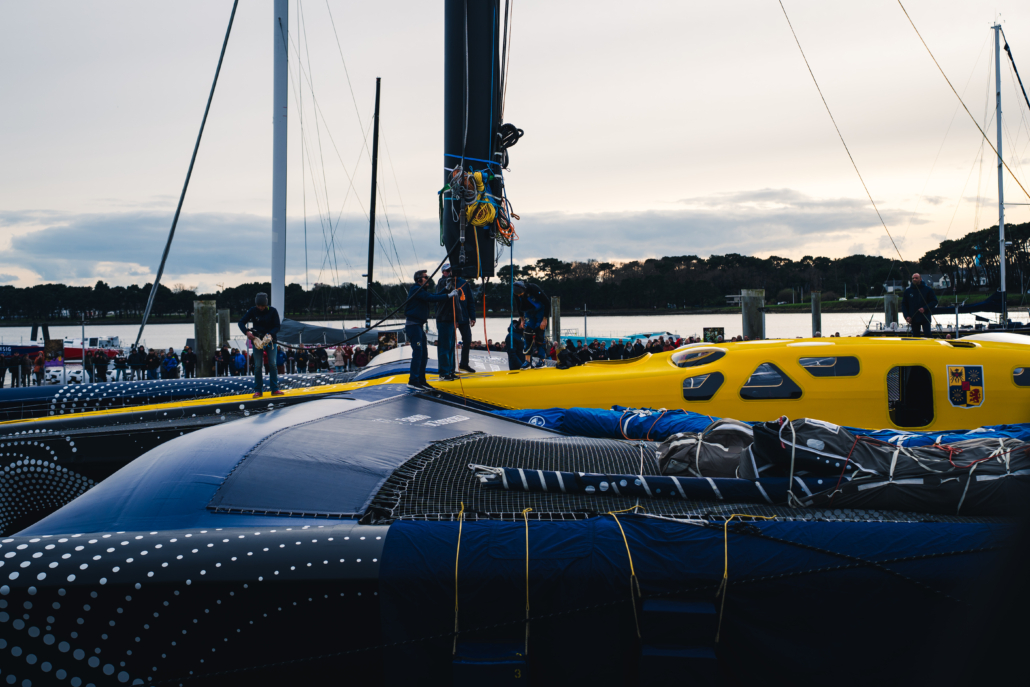
The Gitana 18 project illustrates a shared culture between Verdier’s design team and the Gitana Team: a culture that values experimentation, long-term thinking, and trust.Working alongside CDK Technologies and a network of specialized partners, the design team ensured that architectural intent could be faithfully translated into a buildable, reliable racing machine. The close relationship between designers and builders was key to managing tolerances, materials, and complex composite structures at this scale.
More Than a Boat
As Gitana 18 touches the water, it embodies the result of years of collective effort. It reflects not only technological ambition, but also a method, one where architecture emerges from teamwork, dialogue, and shared responsibility.For Verdier and his team, this trimaran is not an endpoint. It is a platform for learning, sailing, and further exploration, a flying laboratory that will continue to evolve through feedback from sailors and engineers alike.
Gitana 18, Key Innovations at a Glance
1. Flight as a Design Assumption
Gitana 18 was designed on the assumption that the boat spends the majority of its time flying. This shift fundamentally redefined hull volumes, platform balance, appendage sizing, and load cases.
If not flying the hulls shapes are design to reduce at maximum the water ingress going upwards. We thus designed quite Boxy hull section shapes. These also help in the transition / take off.
Design impact:
-Hulls optimized for minimal hydrodynamic dependency
-Structural stiffness prioritized for airborne sailing
-Stability and control engineered for sustained flight
2. Integrated Platform Architecture
> One structure, one system
The trimaran platform behaves as a single structural entity. Hulls, crossbeams, deck, and appendage attachments were designed simultaneously to control deformation and ensure predictable behavior at speed.
Design impact:
-High torsional stiffness across the platform
-Controlled load transfer between foils, rig, and structure
-Reduced structural lag under dynamic loads
3.Large-Span Retractable Foils
>Lift, control, and adaptability offshore
The foil package was developed as a core architectural element, not an add-on. Their geometry, positioning, and structural integration support efficient lift across a wide speed range and varying sea states.
Design impact:
-Optimized lift-to-drag ratio
-Offshore-capable retraction strategies
-Balanced pitch and roll control in flight
4. Offshore-Optimized Structural Concept
>Stiffness over peak lightness
Rather than chasing minimum weight alone, the structure was designed for predictability and durability under repeated high-load cycles.
Design impact:
-Carbon composite structures with optimized fiber orientation
-Continuous load paths from appendages to hulls
-Structural margins aligned with long-distance racing
5. Aerodynamics as a Performance Driver
>Managing air as carefully as water
Aerodynamic drag and lift were treated as primary design variables. Deck shapes and transitions were developed to work efficiently at high apparent wind angles.
Design impact:
-Reduced aerodynamic drag
-Contribution to vertical and horizontal lift
-Improved flow consistency across the platform
6. Appendage Package as a Control System
>Foils, rudders, and daggerboards working together
Appendages were conceived as a coordinated control system, balancing lift generation, pitch stability, and directional control.
Design impact:
-Stable flight attitude
-Controlled touchdown behavior
-Consistent helm feedback
7. Rig Integrated into the Flight Concept
> Apparent-wind sailing at scale
The rig and sail plan were developed to support sustained high-speed sailing, where apparent wind dominates and platform loads are continuous.
Design impact:
-Rig loads aligned with platform stiffness
-Sail efficiency across wide speed ranges
-Balanced interaction with foils and structure
-Capability to change the sail volume by implementing a diamond spreader system onto the mast as per Tornado catamarans. This feature requires huge Cunningham tension but will help us considerably at sailing through the wide range of wind conditions
8. Collective Design Process
>Architecture through collaboration
Gitana 18 is the product of a deeply collaborative process led by Guillaume Verdier, involving naval architects, structural engineers, aerodynamicists, builders, and sailors from the earliest stages.
Design impact:
Faster convergence of solutions
Coherent decision-making across disciplines
Design intent preserved from concept to launch
9. A Platform Designed to Evolve
>Built for learning and refinement
Gitana 18 is not a frozen object. Its architecture allows ongoing development through sailing data, feedback, and future iterations.
Design impact:
-Progressive optimization potential
-Knowledge transfer to future projects
-A long-term offshore flight laboratory
